Current vs. Savings Accounts: Why Your Business Needs the Switch
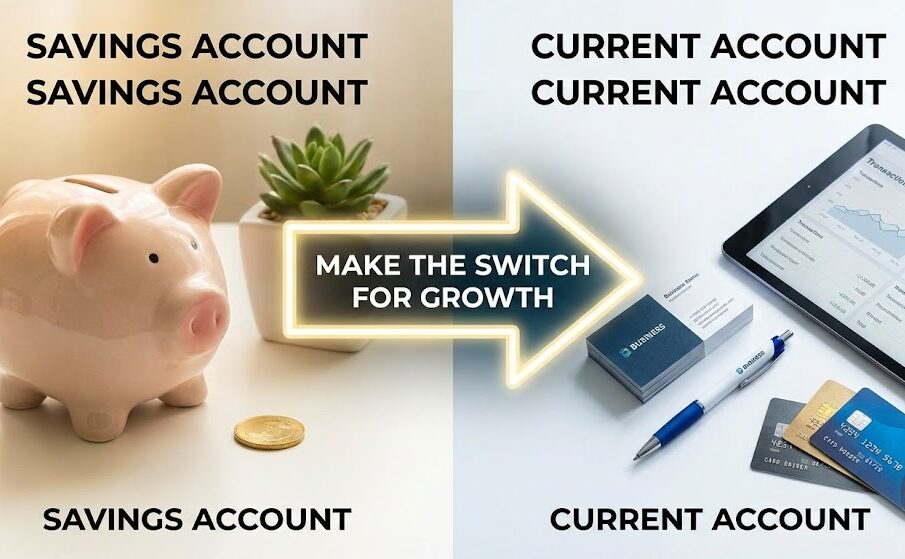
Running a business is not just about making money — it is about managing money wisely. Many new entrepreneurs start their journey using a personal savings account for business transactions. At first, this may feel simple and convenient, but as the business grows, this approach can create financial confusion, tax issues, and missed opportunities.
One of the most important decisions for any business owner is choosing between a Savings Account and a Current Account. While both accounts are offered by banks, they serve very different purposes. Understanding this difference can help you run your business smoothly, professionally, and legally.
If you are serious about your business — whether small, medium, or large — switching from a savings account to a current account is not just recommended, it is often necessary.
What is a Savings Account?
A savings account is designed for individuals, not businesses. Its main purpose is to encourage people to save money and earn interest on their balance.
People use savings accounts for:
- Salary deposits
- Personal expenses
- Household bills
- Emergency funds
- Daily small transactions
Banks limit the number of monthly transactions in savings accounts. If you exceed the limit, extra charges apply. This makes savings accounts unsuitable for businesses that require frequent deposits and withdrawals.
While a savings account is safe and simple, it does not support business needs effectively.
What is a Current Account?
A current account is specifically designed for businesses, traders, freelancers, startups, and companies.
It allows unlimited transactions, making it ideal for:
- Receiving customer payments
- Paying suppliers and vendors
- Handling salaries
- Making bulk transfers
- Running daily business operations
Unlike savings accounts, current accounts usually do not offer interest on balance. However, they provide features that are far more valuable for business growth.
These features include:
- Overdraft facility
- Cheque book
- Business debit card
- UPI for business
- Payment gateway integration
- Online banking tools
- Tax-friendly records
For a business owner, a current account is not just a bank account — it is a financial management tool.
Key Differences Between Current and Savings Accounts
| Feature | Savings Account | Current Account |
|---|---|---|
| Purpose | Personal use | Business use |
| Transactions | Limited | Unlimited |
| Interest | Earns interest | No interest |
| Overdraft | Usually not allowed | Available |
| Minimum balance | Low | Higher |
| Business tools | Limited | Extensive |
| Tax tracking | Difficult | Easy |
| Professional image | No | Yes |
This simple comparison clearly shows why a current account is better suited for business needs.
Why Using a Savings Account for Business is Risky
Many small business owners initially use their personal savings account because it feels easy. However, this can cause serious problems later.
1. Mixing Personal and Business Money
When you use the same account for personal and business expenses, it becomes difficult to track profits, losses, and cash flow. This confusion can harm financial planning and decision-making.
2. Problems During Tax Filing
Tax authorities expect clear business records. If your transactions are mixed with personal spending, your accountant may struggle to prepare accurate returns. This can lead to penalties or legal trouble.
3. Bank Restrictions
If a bank notices heavy business activity in a savings account, it may freeze your account or ask you to convert it into a current account.
4. Lack of Professional Image
Customers and vendors trust businesses with proper bank accounts. Sharing a personal savings account for payments can make your business look unprofessional.
Why Your Business Needs a Current Account
Switching to a current account is one of the smartest financial moves for any business owner.
1. Unlimited Transactions
A current account allows you to make as many deposits and withdrawals as needed without extra charges. This is essential for businesses that handle daily payments.
2. Overdraft Facility for Cash Flow
Sometimes businesses face temporary cash shortages. A current account allows overdrafts, meaning you can withdraw more than your balance up to an approved limit. This can help you manage expenses smoothly.
3. Better Financial Control
With a separate business account, you can clearly track income and expenses. This makes budgeting, planning, and decision-making much easier.
4. Easy GST and Tax Compliance
If your business is registered under GST, having a current account makes filing returns simpler and more transparent.
5. Professional Credibility
When clients see your business name on invoices and bank details, they feel more confident in working with you.
6. Access to Business Loans
Banks are more likely to approve business loans if you maintain a current account with consistent transaction history.
Who Should Open a Current Account?
A current account is suitable for:
- Shop owners
- Freelancers
- Online sellers
- Small business owners
- Startups
- Traders
- Manufacturers
- Service providers
- E-commerce sellers
If you earn money from customers or clients regularly, you should have a current account.
Documents Required to Open a Current Account
Most banks in India require:
- PAN card
- Aadhaar card
- Business registration proof
- GST certificate (if applicable)
- Address proof
- Passport-size photos
- Business name proof
Requirements may vary slightly from bank to bank.
Costs Involved in a Current Account
Current accounts usually have:
- Higher minimum balance
- Annual maintenance charges
- Transaction fees
However, these costs are small compared to the financial benefits your business gains.
Think of it as an investment in your business growth rather than an expense.
How to Choose the Right Current Account
Before opening an account, consider these factors:
1. Bank Reputation
Choose a bank with good customer service and digital facilities.
2. Online Banking Features
Ensure the bank offers smooth mobile banking and UPI services.
3. Charges and Fees
Compare minimum balance requirements and transaction costs.
4. Overdraft Facility
Check if the bank offers easy overdraft options.
5. Business Support
Some banks provide extra services like POS machines, payment gateways, and loan support.
How to Make the Switch from Savings to Current Account
Switching is simple:
- Visit your bank branch or apply online.
- Submit required business documents.
- Close or separate your personal savings account.
- Start using your new current account for all business transactions.
Many banks also allow conversion of an existing savings account into a current account.
Common Myths About Current Accounts
Myth 1: Current accounts are only for big businesses
Truth: Even small shops and freelancers should use current accounts.
Myth 2: Current accounts are too expensive
Truth: The benefits far outweigh the costs.
Myth 3: Savings accounts are enough for startups
Truth: They may work initially, but they limit growth.
How a Current Account Helps Business Growth
A current account does more than just hold money — it supports expansion.
It helps you:
- Build credit history
- Apply for business loans
- Manage large payments
- Handle international transactions
- Attract serious clients
Banks view businesses with current accounts as more reliable and stable.
Final Thoughts: Make the Smart Move Today
If you are running a business, using a savings account is like driving a car without insurance — you might get away with it for a while, but the risk is too high.
A current account gives your business structure, credibility, and financial strength.
Switching is not just a banking decision — it is a business growth decision.
The sooner you make the change, the smoother your financial journey will be.
Your business deserves the right financial foundation. And that foundation begins with a proper current account.








-
ETFs vs. Mutual Funds vs. Stocks: Understanding the Key Differences Before You Invest
Understanding the difference between ETFs, mutual funds, and stocks can help you ...