
Giant’s Causeway: Northern Ireland’s Natural Wonder of Stone and Legend
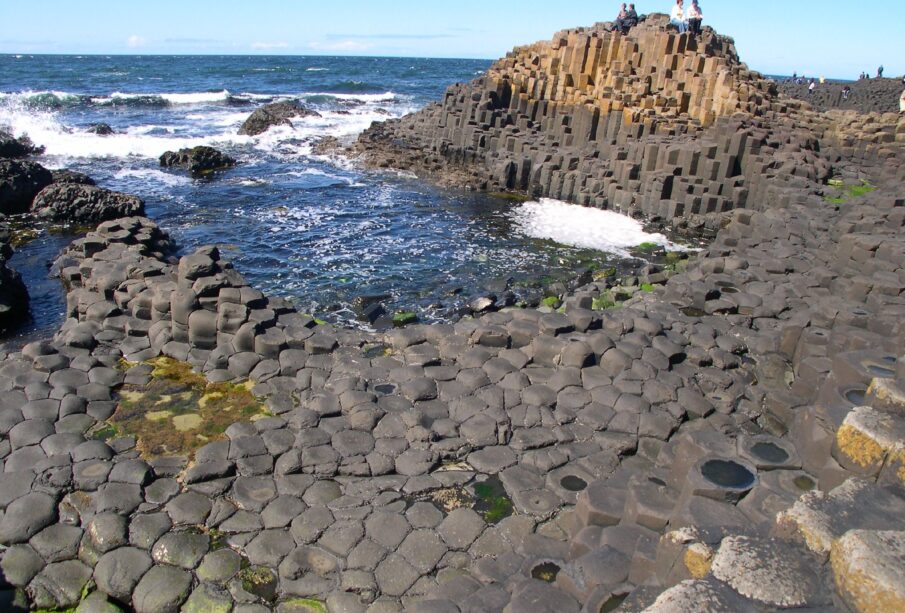
On the rugged northeast coast of Northern Ireland lies one of the most extraordinary geological landscapes on Earth — the Giant’s Causeway. With over 40,000 interlocking basalt columns rising dramatically from the sea, this UNESCO World Heritage Site is a breathtaking blend of science, myth, and natural beauty.
If you’re searching for a destination that combines dramatic coastal views, fascinating geology, and ancient Irish folklore, the Giant’s Causeway deserves a top spot on your travel list.
Where Is Giant’s Causeway Located?
The Giant’s Causeway is situated in County Antrim, Northern Ireland, about 60 miles (97 km) from Belfast. It stretches along the North Atlantic coastline and is surrounded by steep cliffs, green hills, and spectacular sea views.
The site is managed by the National Trust, which preserves its natural beauty and provides visitor facilities.
How Was the Giant’s Causeway Formed?
Unlike many ancient landmarks shaped by human hands, the Giant’s Causeway is entirely natural.
Volcanic Origins (Around 60 Million Years Ago)
The formation began during a period of intense volcanic activity. Molten basalt lava erupted through cracks in the earth’s crust and spread across the land. As the lava cooled rapidly, it contracted and cracked into polygonal columns — mostly hexagonal shapes.
This cooling process created thousands of tightly packed basalt pillars that appear almost man-made due to their symmetry and precision.
Some columns reach heights of 12 meters (39 feet), and the solidified lava in the cliffs is over 28 meters thick in some places.
Why Are the Stones Hexagonal?
The hexagonal shape is not random. When lava cools and contracts evenly, it naturally forms hexagonal cracks — similar to patterns seen in dried mud or honeycombs.
Hexagons are the most efficient geometric shape for tight packing without gaps, which is why the structure looks so perfectly engineered by nature.
The Legend of Finn McCool
While science explains the volcanic origin, Irish folklore tells a much more magical story.
According to legend, the giant Finn McCool (Fionn mac Cumhaill) built the causeway as a bridge to Scotland to fight a Scottish giant named Benandonner. When Finn realized his opponent was much larger than expected, his wife disguised him as a baby. Seeing the “baby’s” enormous size, Benandonner assumed the father must be gigantic and fled back to Scotland, destroying the bridge behind him.
Interestingly, similar basalt formations can be found across the sea at Fingal’s Cave in Scotland, adding charm to the legend.
UNESCO World Heritage Status
In 1986, the Giant’s Causeway was declared a UNESCO World Heritage Site due to its outstanding geological significance. It is also a National Nature Reserve, protecting its unique rock formations and surrounding biodiversity.
Top Things to See at Giant’s Causeway
1. The Grand Causeway
The main area with the largest and most impressive basalt columns, forming a natural stepping-stone path into the sea.
2. The Chimney Stacks
Tall columns rising like ancient towers from the cliffs.
3. The Giant’s Boot
A uniquely shaped rock formation resembling a giant shoe.
4. The Wishing Chair
A natural stone seat formed by the basalt columns — a favorite photo spot for visitors.
Best Time to Visit
- Spring & Summer (April–September): Mild weather and greener landscapes.
- Early Morning or Late Evening: Fewer crowds and stunning lighting for photography.
- Sunset Views: The golden light reflecting on the basalt columns creates unforgettable scenery.
Northern Ireland’s weather can change quickly, so carrying a light waterproof jacket is always a good idea.
How to Reach Giant’s Causeway
- Nearest Airport: Belfast International Airport.
- By Car: Scenic coastal drive from Belfast (about 1.5 hours).
- Public Transport: Train to Coleraine, then bus to the site.
Many tourists also combine their visit with the famous Causeway Coastal Route, one of the most scenic drives in the UK.
Interesting Facts About Giant’s Causeway
- Over 40,000 basalt columns make up the formation.
- Most columns are hexagonal, but some have four, five, seven, or eight sides.
- The tallest columns reach around 12 meters high.
- It attracts over one million visitors annually.
- It’s one of the most photographed natural landmarks in the United Kingdom.
Why Giant’s Causeway Is a Must-Visit Destination
The Giant’s Causeway is a rare place where geology meets mythology. Standing on the hexagonal stones, listening to waves crash against the cliffs, and feeling the Atlantic wind creates an unforgettable experience.
It’s not just a tourist attraction — it’s a reminder of Earth’s immense natural power and the stories humans create to explain the world around them.
Whether you are a nature lover, photographer, history enthusiast, or simply someone seeking a unique travel experience, the Giant’s Causeway offers something extraordinary.







-
Share Market and Economy in India 2026: Growth, Stability and Market Direction
This article presents a clear and practical understanding of India’s economic condition ...