
AI in Finance: How Artificial Intelligence Is Transforming Personal Banking and Trading
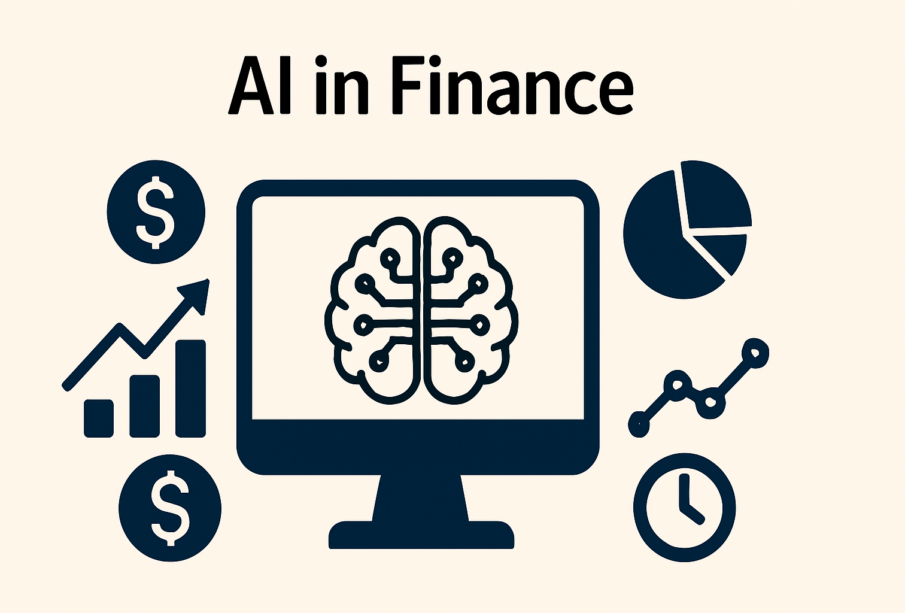
Artificial Intelligence is no longer a futuristic concept reserved for tech labs and science fiction movies. It is now deeply embedded in the financial world, reshaping how individuals manage money, how banks operate, and how trading decisions are made. From personalized banking experiences to automated stock trading systems, AI in finance is revolutionizing the industry at an unprecedented pace.
If you use a banking app, receive spending alerts, interact with a chatbot, or invest through algorithm-based platforms, you are already experiencing the impact of artificial intelligence.
Let’s explore how AI is changing personal banking and trading — and what it means for the future of finance.
What Is Artificial Intelligence in Finance?
Artificial Intelligence (AI) in finance refers to the use of machine learning, data analytics, natural language processing, and automation technologies to improve financial services.
Unlike traditional software, AI systems learn from data patterns and improve over time. They can analyze massive amounts of financial data within seconds — something humans simply cannot match.
In simple terms, AI helps financial institutions:
- Detect fraud faster
- Personalize customer experiences
- Automate trading strategies
- Assess risk more accurately
- Improve customer service efficiency
How AI Is Changing Personal Banking
1. Smarter Customer Support with AI Chatbots
One of the most visible uses of AI in banking is AI-powered chatbots.
These virtual assistants can:
- Answer customer queries instantly
- Provide account balance updates
- Help reset passwords
- Guide users through transactions
They operate 24/7 and reduce waiting time significantly. Over time, they learn from conversations and become more accurate.
For customers, this means faster service. For banks, it means reduced operational costs.
2. Personalized Banking Experience
AI analyzes your spending patterns, transaction history, and saving habits to provide customized recommendations.
For example:
- Alerts for unusual spending
- Suggestions to reduce unnecessary expenses
- Investment recommendations based on risk profile
- Customized loan offers
Instead of generic financial advice, customers now receive insights tailored specifically to their behavior.
3. Fraud Detection and Security
AI has significantly strengthened banking security.
Machine learning models analyze transaction patterns in real time. If something unusual happens — such as a sudden large transaction from a different location — the system flags it immediately.
Traditional systems relied on fixed rules. AI systems adapt dynamically, making fraud detection faster and more accurate.
This reduces financial losses and increases customer trust.
4. Automated Credit Scoring
Earlier, loan approvals relied heavily on manual verification and limited credit history data.
Now, AI evaluates:
- Income patterns
- Spending habits
- Digital payment history
- Alternative data sources
This allows faster loan approvals and broader financial inclusion, especially for individuals without traditional credit records.
AI in Trading: A Major Transformation
The trading world has experienced perhaps the biggest AI-driven shift.
1. Algorithmic Trading
Algorithmic trading uses AI models to execute trades automatically based on pre-defined strategies.
These systems:
- Analyze historical market data
- Monitor live price movements
- Execute trades within milliseconds
Speed is critical in trading. AI eliminates emotional decision-making and reacts instantly to market signals.
Many institutional investors now rely on AI-driven trading systems.
2. Predictive Market Analysis
AI models process enormous volumes of financial data, including:
- Stock price history
- Economic indicators
- Global news trends
- Social media sentiment
By identifying patterns invisible to human analysts, AI can predict potential market movements with higher probability.
While no system guarantees profits, AI enhances data-driven decision-making.
3. Robo-Advisors for Retail Investors
Robo-advisors are AI-powered platforms that create and manage investment portfolios automatically.
They assess:
- Risk tolerance
- Financial goals
- Time horizon
Then they allocate assets accordingly — usually in diversified portfolios like ETFs or index funds.
For beginners, robo-advisors offer low-cost, accessible investment management without requiring deep financial knowledge.
4. Risk Management and Portfolio Optimization
AI constantly monitors market conditions and adjusts portfolios when necessary.
It can:
- Rebalance investments
- Reduce exposure to risky assets
- Suggest diversification opportunities
This continuous monitoring reduces human error and enhances long-term portfolio stability.
Benefits of AI in Finance
1. Speed and Efficiency
AI processes millions of data points instantly.
2. Reduced Human Error
Automation minimizes calculation mistakes and emotional bias.
3. Cost Reduction
Banks reduce operational expenses through automation.
4. Improved Decision Making
Data-driven insights improve investment strategies.
5. Greater Accessibility
Digital financial services reach remote and underserved populations.
Challenges and Risks of AI in Finance
Despite its advantages, AI also presents challenges.
1. Data Privacy Concerns
AI systems require large amounts of personal data. Protecting this data is critical.
2. Over-Reliance on Automation
Blindly trusting algorithms without human oversight can be risky.
3. Market Volatility Amplification
High-frequency algorithmic trading can sometimes increase short-term volatility.
4. Regulatory Uncertainty
Governments are still developing regulations around AI-driven finance systems.
Responsible implementation is essential.
The Future of AI in Personal Finance
The next phase of AI in finance may include:
- Voice-based financial assistants
- Hyper-personalized wealth management
- AI-driven tax planning
- Real-time global risk monitoring
- Fully automated investment ecosystems
As technology improves, AI systems will become even more intuitive and predictive.
However, human judgment will still play an important role — especially in complex financial decisions.
Should You Trust AI with Your Money?
AI is a powerful tool — but it is not magic.
The smartest approach is to use AI as a support system, not a replacement for financial understanding. Investors should still:
- Understand basic financial principles
- Diversify investments
- Avoid emotional decisions
- Stay informed about market conditions
AI enhances efficiency, but financial literacy remains essential.
Final Thoughts
Artificial Intelligence is reshaping personal banking and trading in profound ways. From fraud detection and personalized banking services to algorithmic trading and robo-advisory platforms, AI is making finance faster, smarter, and more accessible.
For individuals, this means better financial insights and improved convenience. For institutions, it means greater efficiency and competitiveness.
The financial industry is entering a new era where data, algorithms, and automation work alongside human intelligence.
Understanding how AI influences finance today will help you make smarter decisions tomorrow.







-
Veedu – The Unforgettable Home – Family Intrigue and Redemption
With its layered storytelling and emotionally charged performances, Veedu explores what truly ...