
Squid Game: The Global Phenomenon That Redefined Survival Drama
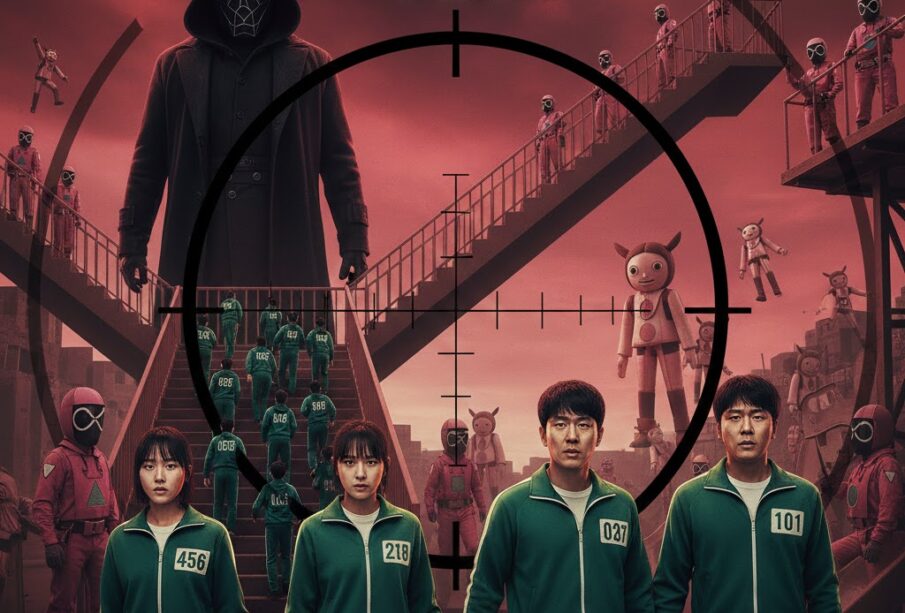
When Squid Game premiered in 2021, few could have predicted its explosive global impact. What began as a South Korean survival thriller quickly became a worldwide cultural phenomenon, dominating streaming charts, inspiring viral trends, and sparking intense discussions about wealth inequality, morality, and human desperation.
Created by Hwang Dong-hyuk and released on Netflix, the series blends childhood nostalgia with brutal competition. Its bright, playful visuals sharply contrast with its dark premise, making it one of the most visually striking and emotionally disturbing shows of the decade.
But beyond the violence and shocking twists lies a deeper commentary about modern society — one that resonates across cultures and continents.
The Premise: Childhood Games with Deadly Consequences
The story centers on Seong Gi-hun, a financially struggling chauffeur drowning in debt. He receives a mysterious invitation to participate in a series of games for a massive cash prize. Along with 455 other participants, Gi-hun enters a secret facility where they compete in traditional Korean children’s games.
There’s only one catch: losing means death.
The prize pool grows with each elimination, symbolizing the direct relationship between human suffering and financial reward. What initially appears as an opportunity quickly reveals itself as a horrifying social experiment.
The Visual World: Bright Colors, Brutal Reality
One of the most distinctive elements of Squid Game is its design.
- Pastel staircases resembling impossible mazes
- Giant playground structures
- Guards in pink uniforms with geometric masks
- Oversized dolls and candy-colored arenas
The childlike aesthetic contrasts sharply with the violent outcomes. This visual irony amplifies the psychological impact. The games look innocent — but the stakes are absolute.
The striking imagery became instantly recognizable, contributing to Halloween costumes, internet memes, and global merchandise sales.
The Characters: Humanity Under Pressure
Seong Gi-hun (Player 456)
Gi-hun is flawed, impulsive, and deeply human. His gambling addiction and financial irresponsibility make him relatable rather than heroic. As the games progress, he confronts moral dilemmas that force him to choose between survival and compassion.
Cho Sang-woo (Player 218)
Once a successful investment banker, Sang-woo represents fallen ambition. His strategic intelligence helps him survive, but at a cost. His moral descent highlights the pressure of societal expectations.
Kang Sae-byeok (Player 067)
A North Korean defector, Sae-byeok enters the games to reunite her family. Quiet and observant, she embodies resilience and vulnerability.
Ali Abdul (Player 199)
A migrant worker exploited by his employer, Ali represents innocence in a ruthless environment. His trust becomes both his strength and his tragic weakness.
Each character reflects a different facet of economic struggle, reinforcing the series’ core message about systemic inequality.
The Social Commentary: Capitalism at Its Extreme
At its heart, Squid Game is a critique of extreme wealth disparity.
The participants are not random. They are people crushed by debt — victims of predatory lending, unemployment, business failures, and social exclusion. The game organizers exploit this desperation, offering a false illusion of choice.
Contestants technically “agree” to participate. Yet the alternative is financial ruin. The series questions whether such consent is truly voluntary in an unequal system.
The VIP spectators, wealthy elites who watch the games for entertainment, represent detached privilege. They gamble on human lives as casually as sports bettors place wagers.
The Psychology of Desperation
The brilliance of Squid Game lies in its psychological realism.
When survival is on the line, morality becomes negotiable. Alliances form and collapse. Trust becomes currency. Fear drives decisions.
The show repeatedly asks:
- How far would you go to protect yourself?
- Would you sacrifice a stranger? A friend?
- Does money justify betrayal?
The pressure cooker environment reveals both cruelty and compassion.
Some players cling to humanity. Others abandon it entirely.
The Iconic Games
Each game draws from simple childhood activities but transforms them into high-stakes trials.
Red Light, Green Light
The opening game shocks both participants and viewers. The sudden brutality establishes the show’s tone.
Tug of War
A physically demanding game that becomes a lesson in strategy and teamwork.
Marbles
Perhaps the most emotionally devastating episode, forcing players to betray someone they trust.
The Glass Bridge
A test of probability and fear, where each step could mean death.
The Final Squid Game
A traditional Korean playground game turned into a symbolic battle for survival.
These games are not merely spectacles. They expose character depth and moral boundaries.
Global Cultural Impact
After its release, Squid Game became one of the most-watched series in streaming history.
Its impact extended beyond viewership:
- Social media challenges
- Fashion inspired by player tracksuits
- Halloween costume trends
- International discussions about Korean cinema and television
The series helped spotlight South Korea’s entertainment industry, following the global success of films like Parasite.
It proved that language barriers are no longer obstacles in the streaming era.
Emotional Core Beneath the Violence
Despite its intense brutality, the series is deeply emotional.
The relationships between players — especially during quieter moments — reveal vulnerability and longing. Conversations about family, regret, and hope humanize the participants beyond their numbered uniforms.
The tragedy hits harder because viewers connect with these characters as people, not just competitors.
The Ending: Hope or Cynicism?
The final episode leaves viewers unsettled.
Gi-hun wins the prize but at immense emotional cost. Wealth does not bring peace. Instead of celebration, there is grief and disillusionment.
The final twist suggests that the games are part of a larger global network, raising questions about systemic exploitation beyond a single arena.
Rather than offering neat closure, the ending invites reflection.
Why Squid Game Resonates Worldwide
1. Universal Financial Anxiety
Debt, job insecurity, and rising living costs are global concerns. Viewers across cultures relate to the desperation driving the characters.
2. Simple Concept, Deep Meaning
The premise is easy to grasp, but layered with philosophical depth.
3. Visual Distinction
Few shows look like Squid Game. Its bold design makes it instantly recognizable.
4. Emotional Storytelling
Beyond spectacle, it delivers powerful character-driven moments.
Criticism and Controversy
The show has faced criticism for its graphic violence and concerns about younger audiences mimicking scenes.
Others debated whether its portrayal of wealth and class oversimplifies complex economic systems.
Yet even critics acknowledge its storytelling strength and cultural significance.
The Broader Conversation on Inequality
Squid Game forces viewers to confront uncomfortable realities:
- The commodification of suffering
- The illusion of equal opportunity
- The moral cost of extreme competition
It suggests that in a system driven by profit, human value can become secondary.
This message resonates in a world increasingly divided by wealth.
Performance and Direction
The cast delivers powerful performances, particularly Lee Jung-jae as Gi-hun. His transformation from naive gambler to emotionally scarred survivor anchors the narrative.
Director Hwang Dong-hyuk balances spectacle with intimacy, ensuring that character development never gets lost amid chaos.
The pacing builds tension steadily, culminating in emotionally charged finales rather than empty shock value.
A New Era for International Television
The success of Squid Game marks a turning point in global entertainment.
It demonstrates that compelling storytelling transcends language. Subtitles no longer limit reach. Audiences are more open than ever to diverse narratives.
The show’s global popularity reinforces the idea that powerful themes — inequality, survival, morality — are universal.
Final Thoughts
Squid Game is more than a survival thriller. It is a mirror reflecting society’s deepest anxieties.
Through its vibrant visuals and harrowing games, it explores what happens when economic desperation collides with human instinct. It questions whether fairness truly exists in systems built on competition.
The series shocks, disturbs, and moves its audience — sometimes all at once.
And perhaps that is why it became a global sensation.
Because beneath the masks, uniforms, and neon playgrounds lies a simple truth: when survival is tied to money, humanity is tested.
In that test, Squid Game asks us not just who would win — but who we would become.








-
Mount Rushmore: A Monument Carved From Stone, History, and Ambition
Seeing Mount Rushmore in person is a quiet but powerful experience. The ...