
Green Finance in India 2026: How Renewable Energy Investments Are Creating Wealth
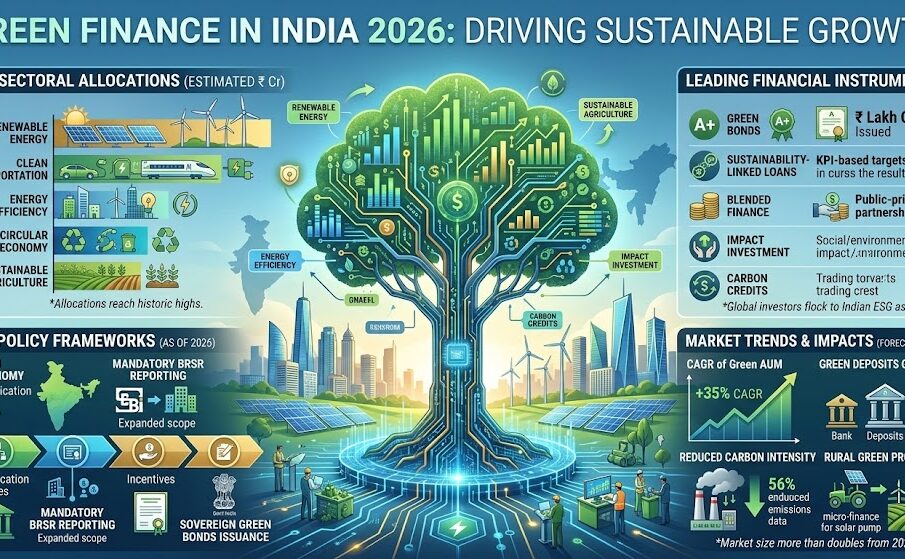
India’s economic story in 2026 is no longer just about GDP growth and stock market expansion. A powerful parallel movement is shaping the country’s financial future — green finance. What once seemed like a niche investment theme has now evolved into a serious economic force.
Renewable energy, sustainable infrastructure and climate-conscious investing are no longer optional trends. They are becoming central pillars of India’s long-term growth strategy. For investors, institutions and policymakers, green finance represents both responsibility and opportunity.
This article explores how green finance is expanding in India, what investment avenues are emerging, and how renewable energy is becoming a wealth-creation engine in 2026.
Understanding Green Finance
Green finance refers to financial investments that support environmentally sustainable projects. These include renewable energy, clean transportation, sustainable agriculture, water management, waste reduction and climate resilience projects.
In India, green finance primarily revolves around:
- Solar and wind energy projects
- Electric vehicle infrastructure
- Energy-efficient manufacturing
- Green bonds and sustainable debt instruments
- ESG-focused mutual funds and equity portfolios
The idea is simple: channel capital into projects that reduce environmental impact while generating financial returns.
Why Green Finance Is Growing in India
Several structural factors are driving the expansion of green finance in 2026.
1. Energy Demand Is Rising Rapidly
India’s growing population and expanding industrial base require massive energy production. Traditional fossil fuels are expensive and environmentally damaging. Renewable energy offers a long-term solution that reduces import dependency and stabilizes costs.
2. Government Policy Support
The Indian government has committed to expanding renewable energy capacity significantly. Targets for solar, wind and green hydrogen production are ambitious. Policy incentives, tax benefits and production-linked schemes are attracting private investment.
3. Global Climate Commitments
India’s climate commitments and participation in international sustainability frameworks have pushed financial institutions to align their portfolios with environmental goals.
4. Investor Preference Shift
Investors, especially younger ones, increasingly prefer companies with strong environmental governance. ESG (Environmental, Social and Governance) metrics are influencing investment decisions more than ever before.
Renewable Energy: The Core of Green Finance
At the heart of green finance in India lies renewable energy.
Solar Energy Expansion
India is one of the largest solar energy producers globally. Solar parks across multiple states are generating large-scale electricity. Rooftop solar adoption is also increasing among households and commercial buildings.
Lower panel costs and improved storage technology have made solar more economically viable than ever.
Wind Energy Growth
Coastal states continue to expand wind power capacity. Offshore wind exploration is also gaining attention as technology becomes more efficient.
Green Hydrogen Initiatives
Green hydrogen, produced using renewable energy, is emerging as a future fuel alternative. Though still in early stages, pilot projects are attracting significant investment interest.
These renewable segments are not only reducing carbon emissions but also creating jobs and supporting manufacturing ecosystems.
Green Bonds: A Major Financing Tool
One of the most important financial instruments driving green finance is the green bond.
Green bonds are debt instruments used specifically to fund environmentally sustainable projects. In India, both government entities and private corporations are issuing green bonds to finance renewable energy and infrastructure projects.
Why Investors Like Green Bonds
- Predictable returns
- Long-term stability
- Alignment with sustainability goals
- Institutional backing
In 2026, green bonds are becoming an important part of fixed-income portfolios, especially for institutional investors.
ESG Investing: Changing the Equity Landscape
ESG investing evaluates companies based on environmental, social and governance standards alongside financial performance.
Mutual funds and asset management companies now offer ESG-focused schemes. These funds invest in businesses that:
- Reduce carbon emissions
- Maintain responsible governance practices
- Follow ethical supply chains
- Invest in renewable energy
For investors, ESG funds provide exposure to growth sectors while aligning with sustainability values.
Wealth Creation Potential in Green Investments
Green finance is not charity. It is a commercial opportunity.
1. Long-Term Demand Stability
Energy demand in India will continue to grow for decades. Renewable energy companies with strong execution capabilities have stable long-term revenue potential.
2. Cost Efficiency
Renewable energy production costs have declined significantly. As technology improves, margins can strengthen.
3. Global Capital Inflows
International climate funds and sovereign investors are actively investing in Indian green projects. This increases valuation support and liquidity.
4. Infrastructure Multiplier Effect
Renewable projects stimulate related sectors such as equipment manufacturing, battery storage, grid infrastructure and engineering services.
This ecosystem effect creates multiple investment opportunities beyond just energy producers.
Challenges in Green Finance
Despite rapid growth, green finance faces hurdles.
1. Capital Intensive Nature
Renewable projects require heavy upfront investment. Returns are stable but spread over long durations.
2. Policy Dependence
Government incentives and regulatory clarity play a major role. Sudden policy changes could impact project viability.
3. Grid Infrastructure Limitations
Renewable energy integration requires modern transmission networks. Infrastructure upgrades must keep pace.
4. Greenwashing Risks
Some companies may exaggerate sustainability claims. Investors must analyze genuine ESG compliance carefully.
Role of Banks and Financial Institutions
Indian banks are increasingly financing renewable projects. Many have dedicated green lending portfolios.
Development finance institutions and multilateral agencies also provide concessional funding for sustainable projects. This reduces borrowing costs and improves viability.
Financial institutions are incorporating climate risk assessment into credit evaluation, reflecting a structural shift in risk management practices.
Electric Vehicles and Clean Mobility
Green finance is not limited to electricity generation. Electric mobility is another major growth area.
Investment is flowing into:
- EV manufacturing
- Battery production
- Charging infrastructure
- Public transport electrification
As fuel prices fluctuate and emission norms tighten, electric mobility adoption is accelerating. This supports long-term investment potential.
Impact on Rural and Local Economies
Renewable projects often operate in rural regions where land availability is higher.
Solar parks and wind farms generate local employment, improve infrastructure and increase income levels. Decentralized renewable systems also support rural electrification and agricultural productivity.
This inclusive growth aspect strengthens political and social acceptance of green investments.
International Perspective
Globally, sustainable investing has become mainstream. Climate funds, pension funds and global asset managers are allocating significant capital toward emerging market green assets.
India, with its scale and growth potential, remains an attractive destination for such capital. In 2026, foreign participation in Indian renewable projects continues to expand.
Retail Investor Participation
Retail investors are gradually participating in green finance through:
- ESG mutual funds
- Renewable energy company stocks
- Green bond investment products
- Thematic exchange-traded funds
As awareness increases, sustainable investing may become a regular component of diversified portfolios.
Economic Impact of Green Finance
Green finance contributes to:
- Energy security
- Reduced fossil fuel imports
- Lower current account pressure
- Job creation
- Technological innovation
Over time, these factors strengthen macroeconomic stability.
India’s shift toward renewable energy also reduces vulnerability to global oil price shocks, enhancing economic resilience.
The Road Ahead
Looking forward, green finance in India is expected to expand in multiple directions:
- Greater issuance of sovereign green bonds
- Increased private sector participation
- Stronger ESG disclosure norms
- Development of carbon trading mechanisms
- Innovation in climate-tech startups
Sustainable finance is moving from being an alternative theme to becoming an integral part of mainstream finance.
Conclusion
Green finance in India in 2026 is no longer a futuristic concept. It is a growing economic reality. Renewable energy, sustainable infrastructure and ESG-focused investing are shaping capital allocation decisions across the financial system.
For investors, the opportunity lies not only in environmental impact but also in long-term wealth creation. While challenges exist, the structural drivers — rising energy demand, policy support and global climate alignment — remain strong.
India’s transition toward a cleaner energy future is creating a parallel financial revolution. Green finance stands at the intersection of sustainability and profitability, making it one of the most important investment themes of this decade.








-
Kamali (Zee Marathi) – Full Story, Cast, Timing & Complete Show Details
If you follow Marathi television regularly, you’ve probably heard about Kamali, one ...