
Bank Current Account for Business in India – Meaning, Benefits, Documents & Step-by-Step Process (Complete Guide 2026)
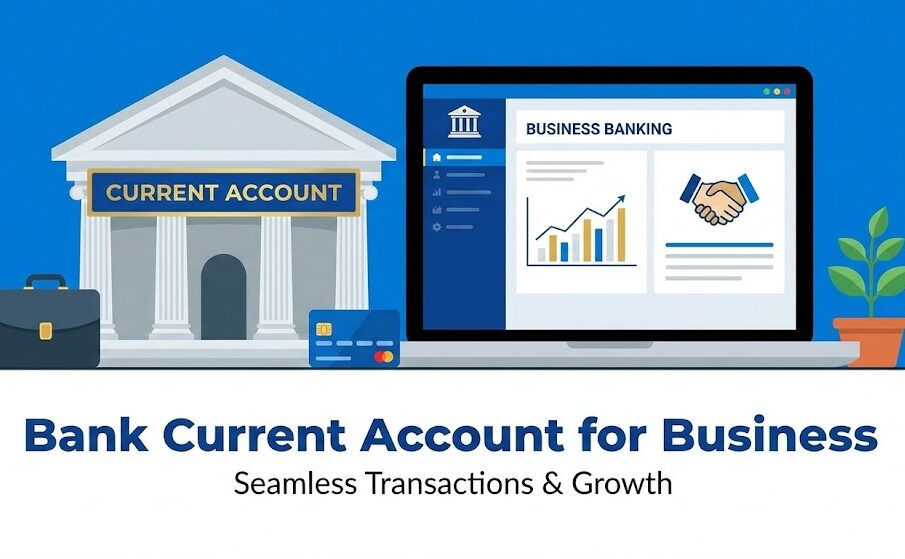
Running a business in India requires proper financial management, transparency, and compliance. One of the most important steps for any entrepreneur, startup, shop owner, freelancer, or company is opening a Bank Current Account for Business. Unlike a savings account, a current account is specifically designed for commercial and business transactions.
A business current account helps separate personal finances from business finances, making accounting easier, improving credibility, and ensuring smooth operations. Whether you are a small shop owner, MSME, partnership firm, LLP, or private limited company, having a current account is not optional — it is essential.
This article explains everything in detail: what a business current account is, who needs it, benefits, documents required, step-by-step opening process, charges, best banks, and common mistakes to avoid.
What is a Bank Current Account for Business?
A Current Account is a type of bank account meant for businesses that conduct frequent financial transactions such as:
- Receiving customer payments
- Paying suppliers and vendors
- Paying salaries
- Receiving online payments
- Paying GST, TDS, and other taxes
- Managing daily business expenses
Unlike a savings account, a current account:
- Has no interest
- Allows unlimited transactions
- Provides overdraft facility (in many cases)
- Offers business tools like cheque book, RTGS, NEFT, IMPS, and internet banking
It is designed to support high-volume transactions without restrictions.
Who Needs a Business Current Account?
You should open a business current account if you are:
- Shop owner
- Manufacturer
- Trader
- Freelancer (earning from clients)
- Startup founder
- MSME business
- Partnership firm
- LLP
- Private Limited Company
- NGO or Trust
- Educational institution
- Online seller (Amazon, Flipkart, Meesho, etc.)
If your business regularly receives or makes payments, a current account is necessary.
Difference Between Savings Account and Current Account
Many new entrepreneurs get confused between savings and current accounts. Here is a clear comparison:
| Feature | Savings Account | Current Account |
|---|---|---|
| Purpose | Personal use | Business use |
| Interest | Earns interest | No interest |
| Transactions | Limited | Unlimited |
| Overdraft | Not allowed | Usually allowed |
| Best for | Individuals | Businesses |
If you are running a business, you should not use a savings account for business transactions.
Why is a Business Current Account Important?
1. Legal & Financial Clarity
Keeping business money separate from personal money makes accounting transparent and legally safer.
2. Required for GST Registration
Most GST registrations require a valid business bank account.
3. Builds Business Credibility
Customers and suppliers trust businesses that operate through a proper current account.
4. Easy Tax Filing
Your accountant can easily track income and expenses for GST and Income Tax.
5. Enables Online Payments
You can receive payments via UPI, payment gateways, and bank transfers.
Documents Required to Open a Business Current Account
Documents depend on your business type.
For Proprietorship
- Aadhaar card
- PAN card
- Shop Act License / Trade License
- GST Certificate (if applicable)
- Business address proof
- Passport size photos
For Partnership Firm
- Partnership deed
- PAN of firm
- Address proof
- Partner ID proofs
- GST certificate
For LLP or Private Limited Company
- Certificate of Incorporation
- PAN of company
- Memorandum of Association (MOA)
- Articles of Association (AOA)
- Board resolution
- Director ID proofs
- GST certificate
Step-by-Step Process to Open a Business Current Account
Step 1 – Choose a Bank
Compare banks based on:
- Minimum balance requirement
- Transaction charges
- Internet banking features
- Overdraft facility
- Branch network
Popular banks include:
- State Bank of India (SBI)
- HDFC Bank
- ICICI Bank
- Axis Bank
- Kotak Mahindra Bank
Step 2 – Visit Bank Branch or Apply Online
You can:
- Visit bank branch with documents, or
- Apply online through bank website
Step 3 – Submit Documents
Bank will verify:
- Business identity
- Address
- KYC documents
Step 4 – Account Activation
Once approved, you will receive:
- Account number
- Cheque book
- Debit card
- Internet banking access
This usually takes 2–7 working days.
Features of a Business Current Account
A good business current account offers:
- Unlimited deposits and withdrawals
- Cheque book facility
- RTGS / NEFT / IMPS
- Internet banking
- Mobile banking
- Overdraft option
- Business loan linkage
Minimum Balance Requirement
Most banks require:
- ₹10,000 to ₹50,000 minimum balance
However, some banks offer zero-balance business accounts for startups and MSMEs.
Charges and Fees
Common charges include:
- Monthly maintenance fee
- Cheque book charges
- Transaction fees
- NEFT/RTGS charges
- SMS alert charges
Always ask for a fee sheet before opening an account.
Can a Freelancer Open a Business Current Account?
Yes.
Freelancers earning from clients can open a current account using:
- PAN
- Aadhaar
- GST (if applicable)
- Business proof (website, invoice, etc.)
This is useful for receiving international payments as well.
Current Account for Online Sellers
If you sell on:
- Amazon
- Flipkart
- Meesho
- Shopify
- Etsy
A business current account is recommended because:
- Payments are credited directly
- Easier accounting
- Better tax compliance
Overdraft Facility in Current Account
Many banks offer overdraft up to a certain limit based on:
- Business turnover
- Credit score
- Relationship with bank
This helps manage cash flow during slow business periods.
Current Account vs Digital Wallet
A digital wallet like Paytm Business or Razorpay is useful, but:
- It is not a replacement for a bank current account
- You still need a bank account for settlements and taxes
Best approach: Use both together.
How to Choose the Best Bank for Your Business
Consider:
- Branch near your office
- Low charges
- Good customer support
- Online banking features
- Overdraft availability
If you are a small business, choose a bank with MSME-friendly policies.
Common Mistakes to Avoid
Using Savings Account for Business
This can create problems in tax audit.
Not Keeping Minimum Balance
Banks may charge heavy penalties.
Not Activating Internet Banking
You may face payment delays.
Mixing Personal and Business Funds
This complicates accounting.
Is Current Account Mandatory for GST?
Not legally mandatory in all cases, but highly recommended and often required in practice by GST officers.
Can One Person Have Multiple Current Accounts?
Yes.
Large businesses often maintain accounts in multiple banks for risk management and convenience.
Business Current Account for Startups
Startups should look for:
- Low fees
- Zero-balance option
- Digital banking tools
- Payment gateway integration
Many banks offer startup-friendly accounts.
How Long is a Current Account Valid?
A current account remains active as long as:
- Minimum balance is maintained
- Regular transactions occur
Inactive accounts may be frozen.
Final Thoughts
A Bank Current Account for Business is the backbone of financial operations for any enterprise in India. It helps maintain transparency, build credibility, and ensure smooth transactions with customers, suppliers, and government authorities.
Whether you run a small shop, online business, or large company, opening a current account should be one of your first business steps.
Choosing the right bank and maintaining proper records will save you from legal, tax, and operational problems in the long run.







-
Bali: The Ultimate Travel Destination That Feels Like a Dream You Never Want to Wake ...
In this detailed travel guide, we explore why Bali remains one of ...