
Credit Card Mistakes to Avoid: Smart Habits for Financial Safety
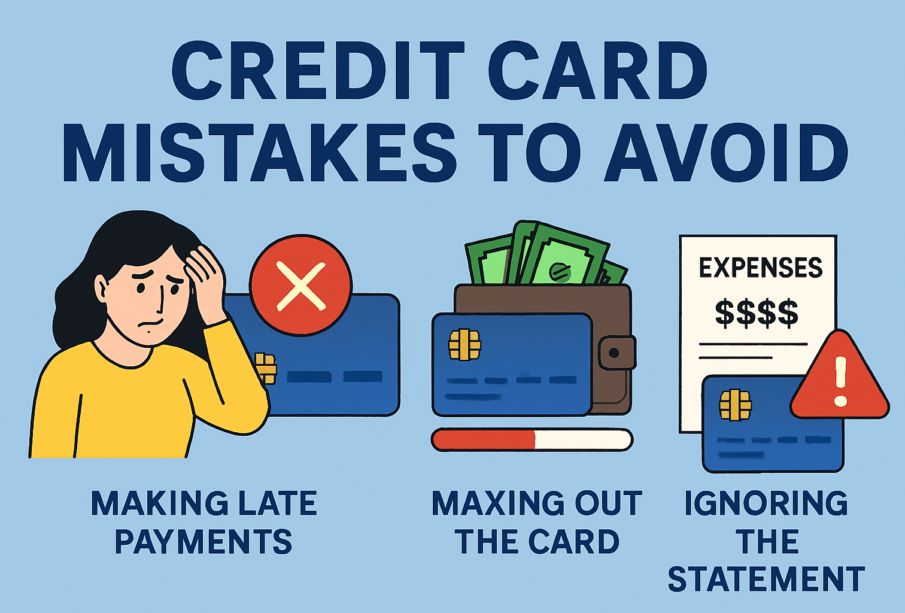
Credit cards can be powerful financial tools when used wisely. They help build credit history, offer rewards, provide emergency support, and make transactions convenient. But when misused, they can quickly lead to debt, stress, and long-term financial damage.
Many people fall into credit card traps not because they lack income — but because they lack awareness. Understanding common credit card mistakes can protect your financial future and help you build strong credit health.
Here are the most important credit card mistakes to avoid.
1. Paying Only the Minimum Due
One of the biggest mistakes people make is paying just the “minimum amount due.”
While this keeps your account from being marked late, the remaining balance continues to accumulate high interest. Over time, you may end up paying double or even triple the original purchase amount.
Smart habit:
- Always try to pay the full outstanding balance.
- If that’s not possible, pay as much above the minimum as you can.
Interest on credit cards is usually very high — avoiding it should be your priority.
2. Missing Payment Deadlines
Late payments result in:
- Late payment fees
- High penalty interest
- Negative impact on your credit score
Even one missed payment can lower your credit score significantly.
Smart habit:
- Set automatic payment reminders.
- Enable auto-debit for at least the minimum amount.
- Keep track of billing cycles.
Timely payments are the foundation of a strong credit history.
3. Spending Beyond Your Income
A credit limit is not extra income. It’s borrowed money.
Many people treat their credit card limit as available cash and overspend. This leads to large bills that become difficult to clear.
Smart habit:
- Use your credit card only for expenses you can repay comfortably.
- Follow a monthly budget.
- Avoid emotional or impulse spending.
If you wouldn’t pay for it in cash, reconsider charging it to your card.
4. Ignoring Your Credit Utilization Ratio
Credit utilization refers to how much of your available credit you are using. For example, if your limit is ₹1,00,000 and you spend ₹80,000, your utilization is 80%.
Experts recommend keeping utilization below 30%.
High utilization:
- Reduces your credit score
- Signals financial stress to lenders
Smart habit:
- Pay balances early.
- Request a credit limit increase if needed (without increasing spending).
5. Taking Cash Advances
Using a credit card to withdraw cash from an ATM is extremely expensive.
Cash advances:
- Attract higher interest rates.
- Start accumulating interest immediately.
- Include additional withdrawal fees.
Unlike regular purchases, there is usually no interest-free period for cash withdrawals.
Smart habit:
- Use a debit card for cash needs.
- Keep an emergency fund to avoid such situations.
6. Applying for Too Many Credit Cards
Every credit card application results in a “hard inquiry” on your credit report. Multiple inquiries in a short period can lower your credit score.
Having too many cards also increases:
- Overspending risk
- Annual fee burden
- Management complexity
Smart habit:
- Apply only when necessary.
- Choose cards that match your spending habits.
Quality matters more than quantity.
7. Not Reading Terms and Conditions
Many cardholders ignore the fine print. Important details like:
- Annual fees
- Interest rates
- Late fees
- Reward redemption policies
- Foreign transaction charges
Understanding these terms prevents unpleasant surprises.
Smart habit:
- Review your card agreement carefully.
- Compare features before choosing a card.
Financial awareness saves money.
8. Closing Old Credit Cards Too Quickly
Older credit accounts improve your credit history length — an important factor in your credit score.
Closing your oldest card can:
- Reduce your average credit age
- Increase credit utilization
- Lower your credit score
Smart habit:
- Keep old cards active with small occasional purchases.
- Close only if the annual fee is too high and benefits are poor.
9. Ignoring Monthly Statements
Some people swipe their cards and never review statements. This can lead to:
- Fraud going unnoticed
- Incorrect charges
- Subscription renewals you forgot about
Smart habit:
- Check statements every month.
- Report suspicious activity immediately.
Monitoring your spending improves financial control.
How to Use a Credit Card Wisely
Credit cards are not bad — misuse is.
Here are simple golden rules:
- Pay the full balance every month.
- Keep utilization below 30%.
- Never miss due dates.
- Avoid unnecessary loans or EMIs.
- Track spending regularly.
When managed properly, credit cards help build a strong credit score, earn rewards, and improve financial credibility.
Final Thoughts
Credit cards offer convenience, rewards, and financial flexibility. But without discipline, they can lead to debt cycles that are difficult to escape.
Avoiding these common credit card mistakes can protect your credit score, reduce financial stress, and support long-term wealth building.
Financial success is not about earning more — it’s about managing money wisely.








-
Import Export Code (IEC) in India – Meaning, Benefits, Documents & Step-by-Step Process (2026 Guide)
IEC is a unique business identification number issued by the Directorate General ...