
Generative AI in Personalized Wealth Management: The Future of Smart Investing
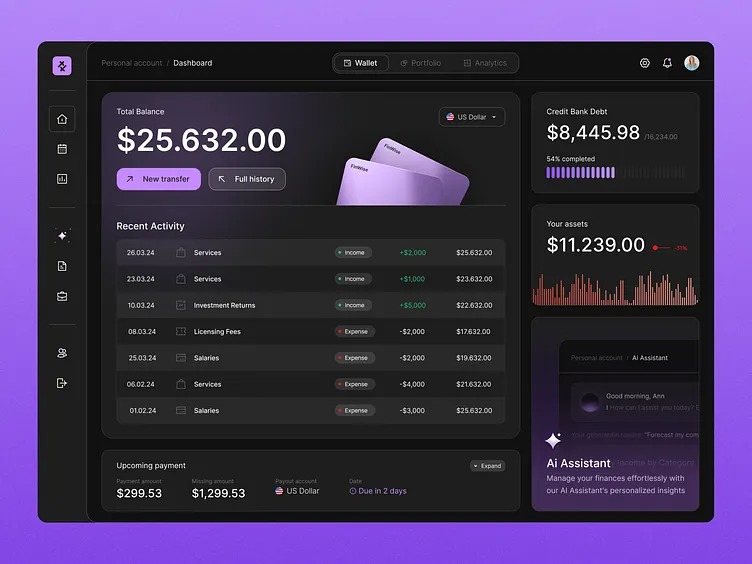
The world of wealth management is changing faster than ever before. For decades, investing was largely guided by human financial advisors, spreadsheets, and traditional portfolio strategies. Today, a new force is reshaping the industry—Generative AI.
This technology is not just automating tasks; it is transforming how financial advice is created, personalized, and delivered. From building custom investment strategies to predicting market trends and enhancing client communication, generative AI is redefining personalized wealth management.
Let’s explore how this powerful innovation is shaping the future of finance.
What Is Generative AI in Wealth Management?
Generative AI refers to advanced systems capable of analyzing massive amounts of financial data and generating insights, recommendations, forecasts, and even personalized reports.
In wealth management, this means:
- Creating customized portfolio strategies
- Drafting personalized financial plans
- Generating risk assessments
- Producing detailed performance reports
- Simulating future investment scenarios
Unlike traditional software that follows rigid rules, generative AI adapts and learns from patterns in financial behavior, market movements, and investor preferences.
The Shift Toward Hyper-Personalization
One of the biggest challenges in wealth management has always been personalization at scale. Traditional advisors can manage only a limited number of clients effectively.
Generative AI changes that.
Tailored Investment Strategies
AI systems analyze:
- Income patterns
- Spending habits
- Risk tolerance
- Life goals
- Market conditions
Using this data, they generate highly personalized portfolios aligned with an individual’s financial objectives.
For example, a 30-year-old entrepreneur with aggressive growth goals receives a different strategy than a 55-year-old professional planning for retirement. AI adjusts allocations dynamically as conditions change.
Smarter Risk Assessment
Risk profiling has traditionally relied on questionnaires. While useful, these methods can miss deeper behavioral insights.
Generative AI goes further by examining:
- Historical transaction behavior
- Emotional responses to market volatility
- Asset diversification patterns
- Economic indicators
This enables more accurate risk modeling and better portfolio protection during uncertain markets.
Real-Time Market Intelligence
Financial markets move in milliseconds. Human advisors cannot process global data at that speed.
Generative AI can:
- Monitor global economic news
- Detect emerging trends
- Identify unusual trading patterns
- Simulate potential market outcomes
By continuously learning from new information, AI-powered systems provide dynamic portfolio adjustments instead of static annual reviews.
Enhancing Client Communication
Wealth management is not only about numbers—it’s about trust and clarity.
Generative AI assists advisors by:
- Drafting personalized investment summaries
- Explaining complex financial concepts in simple language
- Generating easy-to-understand performance reports
- Offering 24/7 chatbot support
Clients receive faster responses and clearer insights about their financial position.
Robo-Advisors and AI-Driven Platforms
The rise of robo-advisors marked the first wave of AI in finance. Now, generative AI takes this further.
Modern AI-powered wealth platforms can:
- Recommend tax-efficient investment strategies
- Adjust asset allocation automatically
- Rebalance portfolios without manual input
- Provide scenario-based retirement projections
This makes wealth management accessible to younger investors who may not meet traditional minimum investment thresholds.
Predictive Financial Planning
Generative AI excels at forecasting multiple possible futures.
It can simulate:
- Retirement savings outcomes
- Market crash impacts
- Inflation-adjusted returns
- Estate planning scenarios
Instead of relying on static projections, investors can explore “what-if” models in real time.
For example:
- What happens if inflation rises sharply?
- How does early retirement affect long-term savings?
- What if property prices decline?
AI provides data-backed answers within seconds.
Operational Efficiency for Financial Firms
Beyond client services, generative AI improves internal efficiency for wealth management firms.
It automates:
- Compliance documentation
- Regulatory reporting
- Portfolio monitoring
- Fraud detection
By reducing manual workload, firms can focus more on strategic planning and relationship building.
Ethical and Regulatory Considerations
While generative AI offers tremendous potential, it also raises important concerns.
Data Privacy
Financial information is highly sensitive. Protecting client data is critical. Firms must implement strong cybersecurity and privacy protocols.
Transparency
Investors need to understand how AI makes decisions. Clear communication about algorithms and decision processes builds trust.
Bias and Fairness
AI systems learn from historical data. If the data contains biases, the outcomes may reflect them. Continuous monitoring and ethical oversight are essential.
Human Advisors + AI: The Hybrid Model
Despite technological advancements, wealth management remains deeply personal.
The most successful model emerging today is a hybrid approach:
- AI handles data analysis and automation
- Human advisors provide empathy, strategic insight, and emotional guidance
This partnership allows for smarter decisions without losing the human touch.
During market downturns, emotional reassurance matters just as much as portfolio adjustments. AI can analyze the numbers, but humans understand feelings.
Benefits for Investors
Generative AI in personalized wealth management offers several advantages:
- Lower management costs
- Faster financial insights
- Highly customized strategies
- Improved risk management
- Continuous portfolio optimization
It democratizes access to advanced financial planning that was once available only to high-net-worth individuals.
The Future of Wealth Management
Looking ahead, generative AI will likely integrate with:
- Blockchain-based asset tracking
- Voice-driven financial assistants
- Advanced predictive economic modeling
- Global real-time data networks
As technology evolves, personalized wealth management will become even more intuitive and accessible.
Imagine receiving instant investment updates tailored to your life goals, with automated adjustments happening in the background—all while you focus on living your life.
Final Thoughts
Generative AI is not replacing wealth management—it is redefining it.
By combining advanced data analysis, predictive modeling, and personalized insights, it empowers investors to make smarter financial decisions. At the same time, it enhances the role of human advisors rather than eliminating them.
The future of investing is no longer one-size-fits-all. It is intelligent, adaptive, and deeply personalized.
As financial markets grow more complex, generative AI stands ready to help individuals navigate uncertainty with clarity and confidence.

Leave a reply





-
Naagin (Colors TV): India’s Most Successful Supernatural TV Franchise Explained
At its core, Naagin revolves around shape-shifting serpents — known as “ichchhadhari ...