
Professional Tax Registration in India – Meaning, Applicability, Process, Documents & Compliance (2026 Guide)
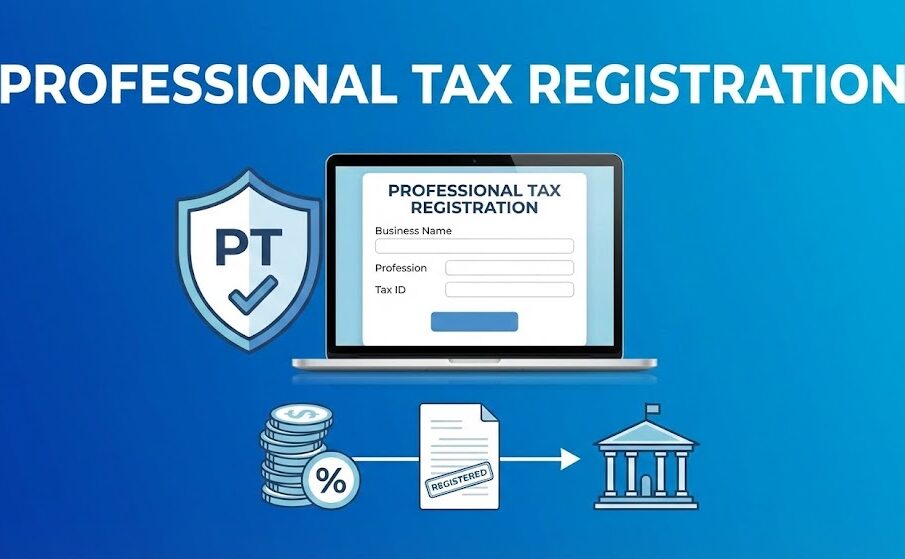
Professional Tax Registration is an important but often misunderstood tax requirement in India. Many business owners, employees, freelancers, and professionals are confused about who needs to pay it, how it works, and why it exists. In reality, professional tax is a simple, state-level tax that applies to people earning income through employment, trade, profession, or business.
Unlike Income Tax, which is collected by the central government, Professional Tax is collected by individual state governments. Each state has its own rules, rates, and registration process. Not all states impose professional tax, but in states where it exists, compliance is mandatory.
This article explains everything clearly — what professional tax is, who must pay it, how to register, documents required, step-by-step process, penalties, exemptions, and how businesses handle deductions for employees.
What is Professional Tax?
Professional Tax is a direct tax levied by state governments on individuals earning an income through:
- Salary
- Business
- Profession
- Trade
- Employment
- Consultancy
- Freelancing
- Self-employment
It is usually deducted from an employee’s salary by the employer and paid to the state government on their behalf.
For businesses, professional tax registration is required so they can legally deduct and deposit this tax for their employees.
The maximum professional tax in any state cannot exceed ₹2,500 per year per person, as per constitutional limits.
Which States Have Professional Tax?
Professional tax is applicable in most major states including:
- Maharashtra
- Karnataka
- Tamil Nadu
- West Bengal
- Andhra Pradesh
- Telangana
- Gujarat
- Kerala
- Assam
- Odisha
- Meghalaya
- Bihar
- Jharkhand
States like Delhi, Haryana, Rajasthan, Uttar Pradesh, Punjab, and Madhya Pradesh do not currently levy professional tax.
If your business operates in a state where professional tax applies, registration becomes compulsory.
Who Needs Professional Tax Registration?
Professional tax registration is required for two main categories:
1. Employers (Business Owners, Companies, Shops, Offices, Firms)
You must register if:
- You have employees
- You run a company, LLP, partnership, or proprietorship
- You operate a shop, factory, office, or commercial establishment
- You pay salaries or wages
As an employer, you need to:
- Register for Professional Tax
- Deduct tax from employees’ salaries
- Deposit it with the state government
- File returns on time
2. Self-Employed Individuals (Professionals & Freelancers)
You may need to register and pay professional tax yourself if you are:
- Doctor
- Lawyer
- Chartered Accountant
- Architect
- Engineer
- Consultant
- Freelancer
- Real estate agent
- Insurance agent
- Tuition teacher
- Shop owner
In such cases, you pay professional tax directly to the government instead of through an employer.
Why is Professional Tax Important?
Professional tax registration is not just a legal formality — it serves several purposes:
1. Legal Compliance
If your state requires professional tax, non-registration can result in fines and legal action.
2. Avoid Penalties
Employers who fail to deduct or deposit professional tax can face heavy penalties.
3. Smooth Business Operations
Many government licenses, audits, and bank processes may ask for professional tax details.
4. Employee Benefits
Proper deduction ensures employees are compliant with state tax laws.
Documents Required for Professional Tax Registration
Documents vary by state, but generally include:
For Employers (Businesses)
- PAN of business
- Aadhaar of proprietor / directors
- Business address proof (rent agreement or electricity bill)
- Shop Act registration certificate
- GST certificate (if applicable)
- Incorporation certificate (for company/LLP)
- Bank details
- Employee list (if already hired)
For Self-Employed Individuals
- PAN card
- Aadhaar card
- Address proof
- Profession proof (if required)
- Bank details
Step-by-Step Professional Tax Registration Process (Online)
Most states allow online registration through their commercial tax department portal.
Step 1 – Visit State Tax Portal
Search for:
“Professional tax registration + your state name”
Example:
- Professional tax registration Maharashtra
- Professional tax registration Karnataka
Always use the official government website.
Step 2 – Create Login
Register using:
- Mobile number
- Email ID
Verify with OTP.
Step 3 – Fill Application Form
Enter details such as:
- Business name
- Type of establishment
- Address
- Number of employees
- Nature of business
- PAN details
Step 4 – Upload Documents
Upload all required documents in PDF format.
Step 5 – Pay Registration Fees
Fees depend on the state but are usually nominal.
Step 6 – Receive Professional Tax Registration Certificate
Once approved, you will get:
- Professional Tax Registration Number (PTR)
- Certificate for employer
This number is used for filing returns and payments.
Professional Tax Slab Rates (Example)
Each state has different slabs. A common structure looks like:
- Monthly salary up to ₹7,500 – No tax
- ₹7,501 to ₹10,000 – ₹175 per month
- Above ₹10,000 – ₹200 per month
(Actual rates depend on your state.)
How Employers Deduct Professional Tax
If you are an employer:
- You register under professional tax
- You deduct tax from employee salary every month
- You deposit it with the state government
- You file returns quarterly or annually
This is similar to TDS under income tax, but at the state level.
Professional Tax Returns Filing
Most states require:
- Monthly payment
- Quarterly or annual return filing
Missing deadlines can result in penalties.
Penalties for Non-Compliance
If you fail to register or pay professional tax:
- You may face fines
- Late payment interest may be charged
- Legal notices can be issued
- Business licenses may be affected
Therefore, timely compliance is always better.
Exemptions from Professional Tax
Some people are exempt in many states, including:
- Senior citizens above 65
- Disabled persons
- Members of armed forces
- Parents of disabled children
- Badli workers in factories
- Casual workers
Exemptions depend on state rules.
Difference Between Professional Tax and Income Tax
| Professional Tax | Income Tax |
|---|---|
| Collected by State Government | Collected by Central Government |
| Maximum ₹2,500 per year | No upper limit |
| Based on profession/salary | Based on total income |
| Mandatory in some states | Mandatory across India |
Both taxes can apply simultaneously.
Is Professional Tax Mandatory for Startups?
If your startup:
- Has employees
- Operates in a state with professional tax
Then registration is mandatory.
If you are a solo founder with no employees and no office, it may not be required in some cases.
Professional Tax vs Shop Act Registration
Many business owners confuse these two:
- Shop Act = Labour law compliance
- Professional Tax = State tax on income
Both are different and may be required together.
Can You Apply Yourself or Need a Consultant?
You can apply yourself if:
- Your business is small
- You understand online portals
- You have documents ready
Hire a CA or consultant if:
- You have many employees
- You run a large company
- You are unsure about state rules
How Long Does Registration Take?
Usually:
- 3 to 10 working days
Time depends on document accuracy and state processing speed.
Final Thoughts
Professional Tax Registration is a basic but essential part of doing business in India. If your business operates in a state where this tax applies, registration is not optional — it is a legal requirement.
For employers, it ensures smooth payroll processing and compliance. For professionals and freelancers, it keeps you legally protected and avoids future disputes.
If you are building a serious business, professional tax registration should be completed along with GST, Shop Act, and Udyam registration.







-
Bali: The Ultimate Travel Destination That Feels Like a Dream You Never Want to Wake ...
In this detailed travel guide, we explore why Bali remains one of ...