Kantara: A Legend Chapter–1 (2025) — The Beginning of a Sacred Saga
Some stories are told. Some are lived. Kantara: A Legend Chapter–1 (2025) feels like something much deeper — it feels like a prayer, a memory, and a myth woven into cinema.
This is not just a sequel or prequel. It is a return to roots, to soil, to faith, to fear, and to the invisible bond between land, people, and the divine.
Where the original Kantara captured the clash between tradition and modern power, Chapter–1 travels further back in time to reveal how this legacy began — why the land is sacred, why the deity protects it, and why defying this balance brings destruction.
Rishab Shetty does not simply direct this film. He breathes life into it.
The World Before the Conflict
The story is set decades earlier, in a remote forest village where life moves with the rhythm of nature.
There are no big cities here. No highways. No corporate offices. Just thick forests, winding rivers, wooden huts, temple bells, and people who speak to the land as if it were alive.
At the center of this world is Shiva’s ancestor — a fiery, fearless young man deeply connected to the forest and its traditions.
He is not a ruler. Not a warrior king. He is a protector.
The villagers believe that the land belongs to the deity — and they are merely its caretakers.
But outside forces are beginning to arrive:
- greedy landlords
- powerful traders
- colonial officials
- and men who see the forest only as money, not as a sacred home
This is where the legend truly begins.
A Man Between Two Worlds
The protagonist is torn between two realities:
On one side — tradition, devotion, and loyalty to the village.
On the other — pressure from outsiders who demand control over the land.
He does not start as a myth. He becomes one.
His transformation is gradual, raw, and deeply emotional.
We see him as a child watching Bhoota Kola.
We see him as a young man challenging injustice.
We see him slowly becoming the vessel of divine power.
There is a haunting scene where he walks alone into the dense forest at night, calling out to the deity — not in anger, but in desperate faith.
That moment alone carries more emotion than many entire films.
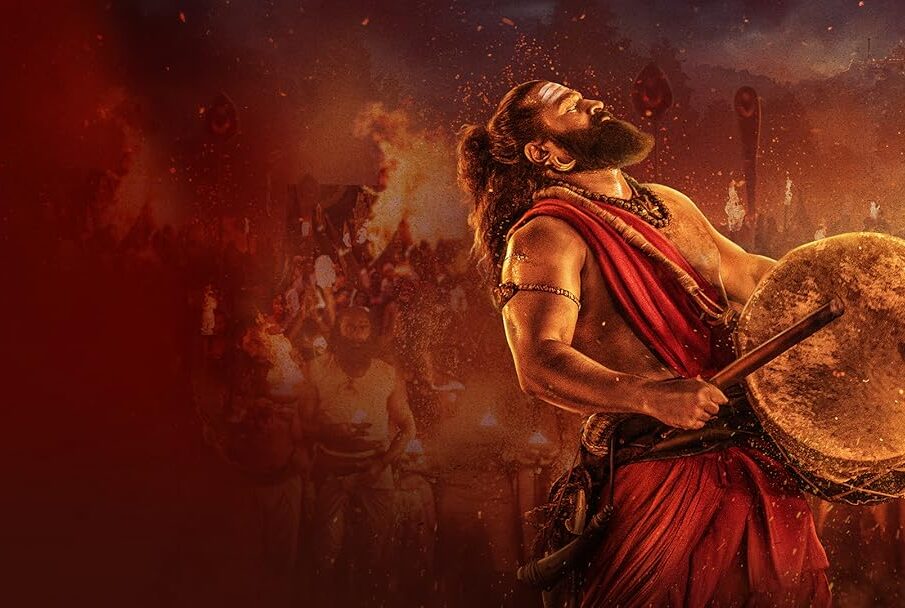
Bhoota Kola — The Soul of the Film
If the original Kantara shocked audiences with its climactic Bhoota Kola, Chapter–1 expands this tradition into something epic.
This is not shown as mere ritual — it is treated as sacred truth.
The makeup, music, drumbeats, fire, and chants create an atmosphere that feels spiritual rather than theatrical.
When the protagonist finally enters the ritual, the line between man and divine disappears.
You do not feel like a spectator.
You feel like a witness.
The camera does not rush. It lingers, breathes, and lets the moment consume you.
The Villain — Not Just Evil, But Greedy
Unlike typical cinema villains, the antagonist here is not a single man with a sword.
He is power itself:
- exploitation
- greed
- colonial arrogance
- disregard for tradition
A wealthy landowner arrives claiming legal ownership over the forest, backed by government documents.
For him, the land is nothing but timber, minerals, and profit.
For the villagers, it is their god, their life, their identity.
This clash is not just political — it is spiritual.
Nature as a Living Character
In Kantara Chapter–1, the forest is not background. It is alive.
The wind carries whispers.
The river feels like a heartbeat.
The trees look like silent guardians.
Cinematography captures mist-covered mountains, roaring waterfalls, and endless greenery with breathtaking beauty.
At times, the film feels less like fiction and more like a nature poem.
Themes That Run Deep
1. Faith vs Greed
The heart of the film is the eternal conflict between devotion and exploitation.
The villagers do not fight for money. They fight for belief.
2. Man as a Bridge to the Divine
The protagonist is not worshipped because he is powerful — but because he is chosen.
He suffers, doubts, bleeds, and yet stands firm.
3. Land as Sacred, Not Property
The film powerfully suggests that land is not something to own, but something to respect.
This message feels especially relevant today.
Action That Feels Primal, Not Stylish
There are fights, but they are not glamorous.
They are rough, earthy, and real — sticks, stones, fire, and raw strength.
No slow-motion hero poses. No over-the-top stunts.
Just survival, rage, and determination.
Music That Enters Your Bones
The background score is hypnotic.
Traditional drums, folk chants, temple bells, and haunting melodies blend into something almost ritualistic.
During Bhoota Kola, the music does not just play — it takes over your heartbeat.
You feel it physically.
Climax — Myth Is Born
Without revealing spoilers, the final act is breathtaking.
The confrontation is not just physical — it is spiritual.
The land speaks. The deity responds. And the legend is sealed.
This is not a loud climax. It is overwhelming in silence, power, and emotion.
You sit stunned, barely breathing.
How It Connects to the Original Kantara
If Kantara (2022) was about the present,
Kantara: Chapter–1 is about the origin.
You finally understand:
- why the land is sacred
- why the deity is fierce
- why defiance brings tragedy
Watching this film makes the original even more powerful.
Who Should Watch It?
You will love this film if you enjoy:
- cultural storytelling
- myth and folklore
- spiritual cinema
- raw, grounded drama
- visually stunning films
If you want light entertainment, this is not that.
If you want something that touches your soul — this is exactly that.
Final Verdict
Kantara: A Legend Chapter–1 (2025) is not just a movie.
It is an experience. A ritual. A reminder of who we are and what we have forgotten.
Rishab Shetty delivers something rare — cinema that feels sacred.
You do not simply watch it.
You carry it inside you.
And long after the film ends, the drums still echo in your heart.








-
Lake District – The Complete Travel Guide to England’s Most Beautiful Natural Escape
Let’s explore the Lake District in complete detail — its history, landscapes, ...