
Mount Rushmore: A Monument Carved From Stone, History, and Ambition
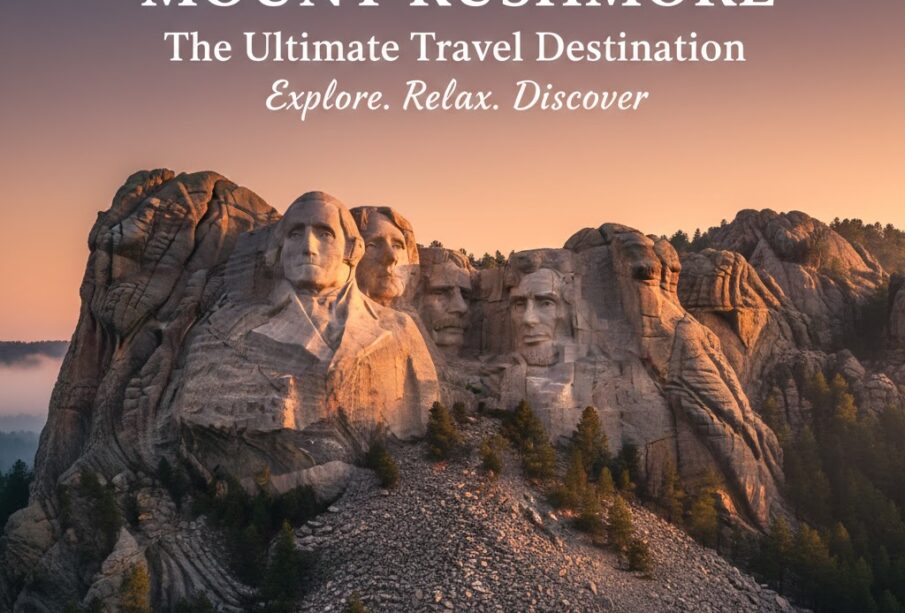
Mount Rushmore is more than a massive sculpture etched into granite. It is a symbol of vision, controversy, determination, and the complicated story of a nation still defining itself. Rising from the Black Hills of South Dakota, this iconic landmark commands attention not just because of its size, but because of what it represents.
Seeing Mount Rushmore in person is a quiet but powerful experience. The scale humbles you, the craftsmanship amazes you, and the history invites reflection. It is a place where art, nature, and national identity intersect.
Where Mount Rushmore Is Located and Why the Setting Matters
Mount Rushmore is located in the Black Hills region of South Dakota, an area known for its rugged beauty, dense forests, and rolling granite peaks. The surroundings play a major role in the monument’s impact.
The isolation of the landscape adds to the sense of grandeur. Unlike monuments surrounded by city life, Mount Rushmore feels anchored in nature. The long approach roads, winding through pine-covered hills, build anticipation and make arrival feel earned rather than incidental.
This setting reinforces the monument’s lasting presence.
The Faces Carved Into the Mountain
Mount Rushmore features the 60-foot-tall faces of four U.S. presidents: George Washington, Thomas Jefferson, Theodore Roosevelt, and Abraham Lincoln. Each was chosen to represent a defining chapter in American history.
Washington symbolizes the nation’s founding. Jefferson represents expansion and democratic ideals. Roosevelt reflects industrial growth and global influence. Lincoln stands for unity and the preservation of the nation.
Together, these figures were meant to tell a story of birth, growth, development, and endurance.
The Vision Behind Mount Rushmore
The idea for Mount Rushmore came from a desire to create a landmark that would draw visitors to South Dakota while celebrating American history. Sculptor Gutzon Borglum envisioned a monument that would last for centuries, carved directly into the mountain itself.
The project required imagination on a massive scale. Turning a mountain into a work of art was not just ambitious—it was unprecedented.
What followed was years of planning, engineering challenges, and relentless dedication.
How Mount Rushmore Was Built
Construction of Mount Rushmore began in the late 1920s and continued for over a decade. Workers carved the faces using a combination of dynamite and precise hand tools.
The process was dangerous, requiring workers to scale sheer rock faces suspended by cables. Despite the risks, the project maintained an impressive safety record for its time.
Every curve, expression, and proportion was carefully planned, ensuring that the faces would appear balanced and recognizable from a distance.
Engineering and Artistic Achievement
Mount Rushmore stands as both an artistic and engineering achievement. The granite chosen for the sculpture is durable, resistant to erosion, and positioned to receive sunlight throughout the day.
The faces were carved with an understanding of perspective, allowing features to remain clear even from far away. Subtle details, such as eye placement and depth, give the monument a lifelike presence.
It is a reminder of what careful planning and craftsmanship can achieve.
The Cultural and Historical Complexity
Mount Rushmore is also a site of debate and reflection. The Black Hills are sacred land to Indigenous communities, and the monument’s construction is viewed by many as a symbol of displacement and loss.
Understanding Mount Rushmore requires acknowledging this complexity. It is both a national icon and a reminder of unresolved historical narratives.
For many visitors, this layered meaning deepens the experience rather than diminishing it.
Experiencing Mount Rushmore Today
Visiting Mount Rushmore is a calm, contemplative experience. The viewing area offers clear sightlines, walking paths, and places to pause and take in the monument.
The surrounding trails allow visitors to see the sculpture from different angles, revealing how it interacts with the natural landscape. As the light changes throughout the day, the monument takes on different moods and shadows.
It is a place that rewards patience and observation.
The Role of the Visitor Center and Exhibits
Educational exhibits near Mount Rushmore provide insight into the monument’s creation, history, and ongoing preservation efforts. These displays help contextualize what visitors see, offering stories behind the stone.
Learning about the workers, tools, and challenges involved brings the monument to life beyond its visual impact.
Understanding adds depth to the experience.
Mount Rushmore and National Identity
For many, Mount Rushmore represents American ideals such as leadership, resilience, and ambition. It has appeared in countless films, photographs, and cultural references, reinforcing its place in global imagination.
At the same time, it encourages reflection on how history is remembered and who gets represented. This dual role makes Mount Rushmore both inspiring and thought-provoking.
It is not a static symbol—it evolves as perspectives change.
The Best Time to Visit Mount Rushmore
The most popular time to visit Mount Rushmore is from late spring through early fall, when weather conditions are comfortable and surrounding attractions are fully accessible.
Summer offers the best visibility and extended daylight, though it also brings more visitors. Spring and autumn provide quieter moments and cooler temperatures, ideal for thoughtful exploration.
Evenings are especially striking, as changing light adds drama to the sculpture.
Preservation and Long-Term Care
Mount Rushmore is actively monitored to protect it from natural wear and environmental factors. Preservation efforts ensure that cracks, erosion, and weather damage are addressed responsibly.
The goal is not to alter the monument, but to maintain its stability and appearance for future generations.
Caring for a mountain-sized sculpture is an ongoing commitment.
Why Mount Rushmore Leaves a Lasting Impression
Mount Rushmore does not overwhelm with noise or spectacle. Its power lies in stillness, scale, and symbolism.
Visitors often leave with mixed emotions—pride, curiosity, reflection, and questions. That emotional response is part of what makes the monument memorable.
It stays with you because it asks you to think.
Final Thoughts
Mount Rushmore stands at the intersection of art, history, ambition, and controversy. It is a monument that reflects both achievement and complexity.
For travelers seeking more than surface-level sightseeing, Mount Rushmore offers an experience rooted in reflection and perspective. It invites visitors to look beyond the stone and consider the stories carved into it.
In doing so, Mount Rushmore becomes more than a landmark—it becomes a conversation across time.





-
Tiger Zinda Hai : When Bollywood Delivered Pure Adrenaline
After the success of Ek Tha Tiger (2012), fans were waiting to ...