
Taj Mahal: A Timeless Monument of Love, Beauty, and Architectural Genius
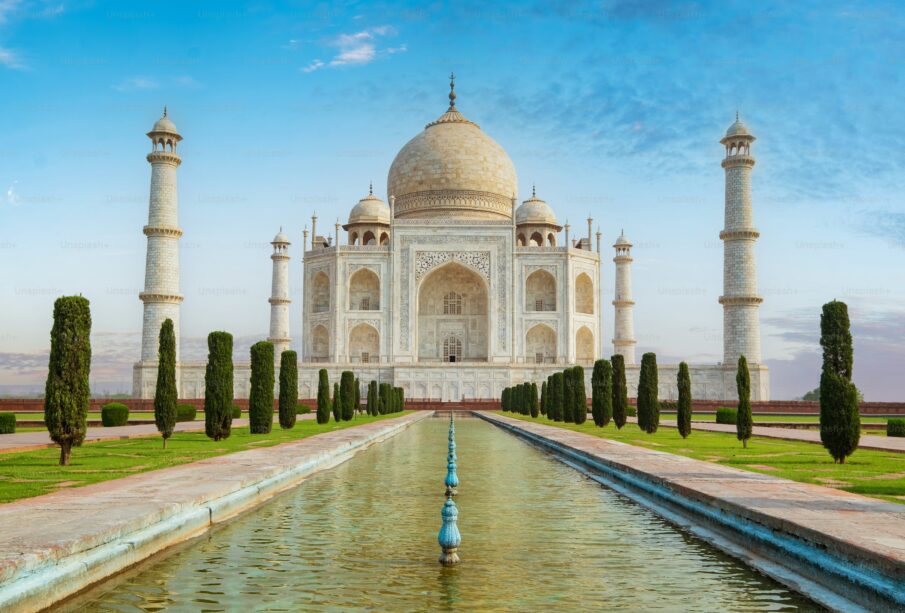
The Taj Mahal is not just a monument. It is an emotion carved in marble. Standing gracefully on the banks of the Yamuna River in Agra, this architectural masterpiece continues to captivate millions of visitors every year. Its white marble shines under the sun, glows softly under the moonlight, and tells a story that has survived for centuries.
Built as a symbol of eternal love, the Taj Mahal remains one of the most admired structures in the world. But beyond its beauty lies a rich history, remarkable craftsmanship, and deep cultural significance that make it far more than just a tourist attraction.
The Love Story Behind the Taj Mahal
The Taj Mahal was commissioned by Mughal Emperor Shah Jahan in memory of his beloved wife, Mumtaz Mahal. Mumtaz Mahal passed away in 1631 during childbirth, leaving Shah Jahan heartbroken. Historical accounts describe their bond as deeply affectionate and strong.
Devastated by her death, Shah Jahan vowed to build a monument so magnificent that the world would remember their love forever. Construction began in 1632 and took approximately 22 years to complete. More than 20,000 artisans and craftsmen from across India, Persia, and Central Asia contributed to its creation.
When you stand before the Taj Mahal, it doesn’t feel like just a building. It feels like a silent love letter written in stone.
Architectural Brilliance of the Taj Mahal
The Taj Mahal is widely considered the finest example of Mughal architecture, blending elements of Persian, Islamic, and Indian styles.
Perfect Symmetry
One of the most fascinating aspects of the Taj Mahal is its near-perfect symmetry. Every element — from the minarets to the gardens — is carefully balanced. The central dome rises approximately 73 meters high and is surrounded by four slender minarets placed at the corners of the main platform.
Interestingly, the minarets are slightly tilted outward. This was done intentionally so that in case of an earthquake, they would fall away from the main tomb.
White Marble and Intricate Inlay Work
The monument is constructed primarily from white marble sourced from Makrana in Rajasthan. The marble surface features intricate floral patterns and calligraphy created using a technique called pietra dura, where semi-precious stones like jasper, jade, turquoise, and lapis lazuli are inlaid into the marble.
The Quranic inscriptions adorning the walls appear uniform in size, but in reality, the script increases slightly in size as it goes higher. This optical illusion ensures it looks perfectly proportioned from the ground.
The Gardens and Water Channels
The Taj Mahal complex follows the traditional Mughal garden layout known as Charbagh, divided into four sections by water channels. These gardens symbolize paradise, reflecting Islamic spiritual concepts.
The long reflecting pool in the center offers one of the most iconic views of the monument. On a calm day, the Taj Mahal appears mirrored perfectly in the water — a sight that leaves visitors speechless.
A UNESCO World Heritage Site
In 1983, the Taj Mahal was designated as a UNESCO World Heritage Site, recognized as “the jewel of Muslim art in India.” It is also considered one of the New Seven Wonders of the World.
Its global recognition is not just because of its beauty, but because it represents a peak in architectural achievement and artistic craftsmanship.
The Changing Colors of the Taj Mahal
One of the most magical aspects of the Taj Mahal is how it changes color throughout the day.
- At sunrise, it glows with a soft pink hue.
- Under the bright afternoon sun, it appears dazzling white.
- At sunset, it takes on golden tones.
- Under moonlight, it shines with a bluish, ethereal glow.
This color transformation adds to its mystical charm. It feels alive — responding to the sky and the light.
Inside the Mausoleum
Inside the main chamber lie the cenotaphs of Mumtaz Mahal and Shah Jahan. The actual graves are located in a lower chamber, as per Islamic tradition.
The central hall is octagonal, with marble screens (jali work) surrounding the tombs. The delicate carvings and stone latticework demonstrate extraordinary precision and artistry.
The interior may feel quieter and darker compared to the bright exterior, but that contrast adds to its solemn beauty. It reminds visitors that this grand monument was ultimately built as a resting place.
The Taj Mahal in Indian Culture and Tourism
Located in Agra, the Taj Mahal is the crown jewel of Indian tourism. Millions of domestic and international travelers visit every year, contributing significantly to the local economy.
It is often part of the famous Golden Triangle tour that includes Delhi, Agra, and Jaipur. For many travelers, seeing the Taj Mahal in person is a dream come true.
The monument has also inspired countless artists, poets, filmmakers, and photographers. It has appeared in literature, paintings, and cinema as a universal symbol of love.
Preservation and Environmental Concerns
Over the years, pollution and environmental factors have posed challenges to the preservation of the Taj Mahal. Industrial emissions and vehicle pollution caused discoloration of the marble.
To protect the monument, the Indian government established the Taj Trapezium Zone (TTZ), restricting industrial activity near the site. Regular cleaning using a special mud-pack treatment helps maintain its original shine.
Preservation efforts continue to ensure that future generations can experience its beauty just as we do today.
Best Time to Visit the Taj Mahal
The Taj Mahal is open year-round except on Fridays (reserved for prayers). However, the best time to visit is during the cooler months from October to March.
Early morning visits are highly recommended. Watching the sun rise behind the white dome is a memory that stays with you forever.
For a unique experience, night viewing is allowed on select days during the full moon. Seeing the Taj Mahal bathed in moonlight feels almost surreal.
Fascinating Facts About the Taj Mahal
Here are some interesting facts that many visitors may not know:
- Over 1,000 elephants were reportedly used to transport building materials.
- The chief architect is believed to be Ustad Ahmad Lahauri.
- The construction cost at the time is estimated to have been around 32 million rupees.
- The Taj Mahal is perfectly aligned with the cardinal directions.
- The calligraphy was done by Amanat Khan Shirazi.
These details highlight the extraordinary effort behind its creation.
Why the Taj Mahal Still Matters Today
In a fast-moving modern world, the Taj Mahal stands as a reminder of patience, craftsmanship, and deep human emotion. It took more than two decades to build — a testament to dedication and vision.
Its story resonates across cultures because love is universal. You don’t need to understand Mughal history to feel something when you see it.
The Taj Mahal is not just India’s pride; it belongs to the world. It symbolizes devotion, artistic excellence, and the timeless power of human expression.
Final Thoughts
The Taj Mahal is more than a historical monument. It is poetry in marble. It is a symbol of undying love, architectural brilliance, and cultural heritage.
Whether you visit at sunrise, admire it in photographs, or learn about its history, the Taj Mahal leaves an impression that is hard to describe in words.
Centuries have passed since Shah Jahan built it for Mumtaz Mahal, yet their love story continues to inspire millions. And perhaps that is the true magic of the Taj Mahal — it makes us believe that some emotions are truly eternal.
If you ever get the chance, stand before it quietly. Let the silence speak. You’ll understand why the Taj Mahal is considered one of the most beautiful monuments ever created.



Leave a reply





-
Bank Current Account for Business in India – Meaning, Benefits, Documents & Step-by-Step Process (Complete ...
This article explains everything in detail: what a business current account is, ...